Why Desert Windows Get Dirty So Fast
Published · Five Star Window Cleaning
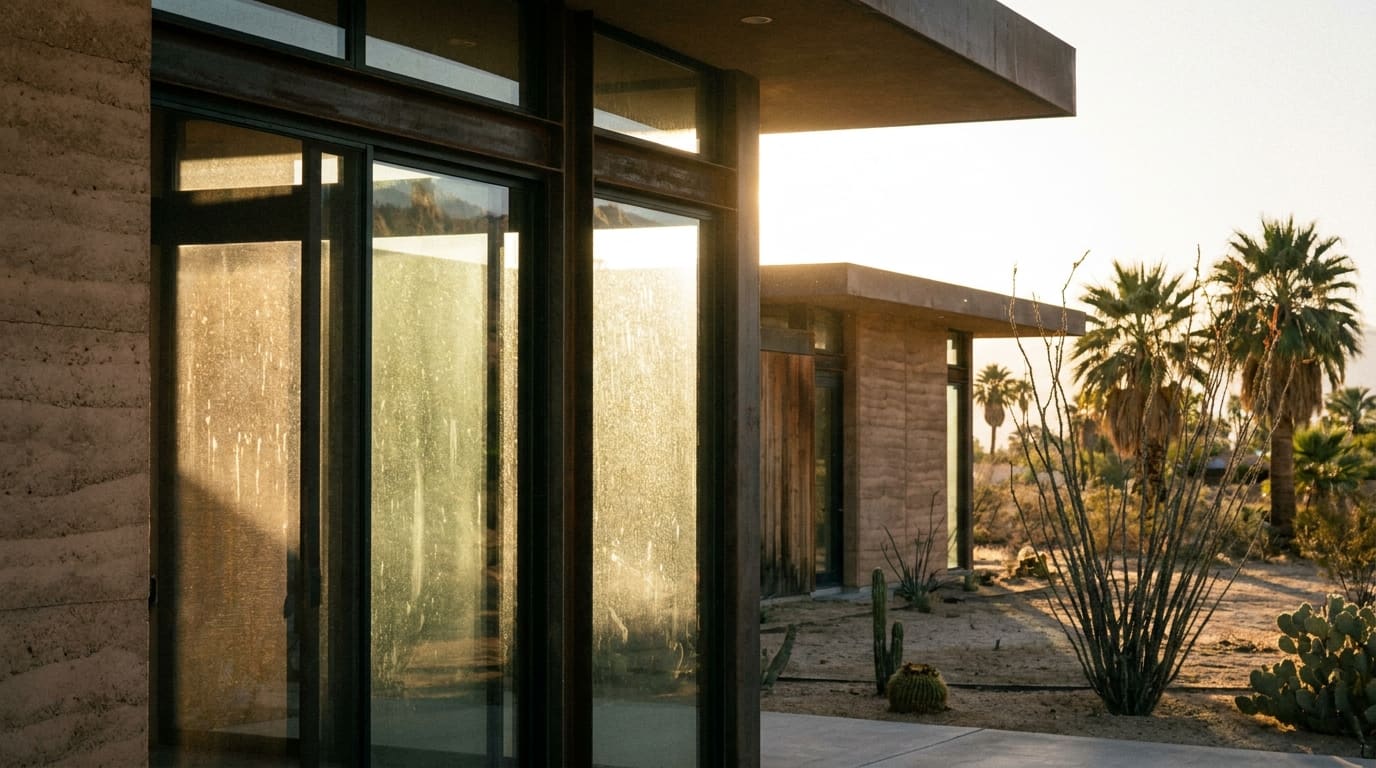
If you live in the Coachella Valley, you've probably noticed it: you get your windows cleaned, they look amazing for a couple of weeks, and then a hazy film creeps back in. It can feel like you just cleaned them. So what's going on? The short answer is that the desert is uniquely hard on glass. Between blowing sand, mineral-heavy water, and intense year-round sun, our windows take a beating that homes in milder climates never deal with.
Here's a closer look at the three biggest culprits, and what you can do to keep your view crystal clear.
1. Blowing sand and fine desert dust
The Coachella Valley sits in a windy corridor, and those winds carry an astonishing amount of fine dust and sand. Unlike the soft dust that settles indoors, desert grit is abrasive and sticky. It clings to the slightest bit of moisture or static on the glass and builds into a dull, gritty haze surprisingly quickly.
Worse, that sand collects in window tracks and screens. Every time the wind kicks up, or you open a slider, it gets redistributed across the glass. This is why a home near open desert or a golf course under renovation can look dirty again within days of a cleaning.
2. Hard water and mineral spotting
Our tap water is notoriously "hard," meaning it's loaded with dissolved calcium and magnesium. Local water quality data puts Coachella Valley tap water at roughly 8.5 grains per gallon, solidly past the 8-grain threshold that classifies water as "hard."1 When sprinklers overspray onto windows, or when you rinse glass with a garden hose, the water dries and leaves the minerals behind as chalky white spots.
These spots are more than cosmetic. Left alone, hard-water deposits etch into the glass surface over time, becoming progressively harder to remove. What starts as an easy wipe can turn into permanent staining that requires special restoration. Catching it early, and keeping sprinklers aimed away from glass, makes a huge difference.
3. Intense, constant sun
The desert sun does two things to dirty windows. First, it bakes dust and water spots onto the glass, essentially curing them in place and making them tougher to remove. Second, that same bright light makes every streak, smudge, and speck glaringly obvious. A window that might look "fine" in a cloudy climate shows every imperfection here.
South- and west-facing windows take the worst of it, which is why those are often the first to look cloudy again.
So how often should you clean desert windows?
Because of all this, most Coachella Valley homes benefit from professional window cleaning every three to six months, more often than the once-a-year schedule that works elsewhere. Homes near open desert, on golf courses, or with lots of sprinkler exposure usually lean toward the every-three-month end. Commercial storefronts that rely on a sharp first impression often go monthly.
A few simple habits help stretch the time between cleanings:
- Aim sprinklers away from glass to prevent hard-water spotting.
- Rinse off heavy dust with plain water after a big wind event, before it bakes on.
- Keep window tracks and screens clear so wind doesn't keep re-coating the glass.
- Address hard-water spots early before they have a chance to etch in.
The bottom line
Desert windows don't get dirty because you're doing anything wrong. They get dirty because the Coachella Valley throws sand, minerals, and sun at them all year long. Regular professional cleaning with the right tools and techniques keeps that buildup from becoming permanent, protects your glass, and keeps your view as clear as the day you moved in.
At Five Star Window Cleaning, we use eco-friendly, non-toxic products and proven methods built for desert conditions, leaving your windows spotless and streak-free, inside and out. The products we choose follow the same standard as the EPA's Safer Choice program, which certifies cleaning products whose ingredients meet strict human-health and environmental-safety criteria.2
Sources:
1. Coachella Valley Water District, Water Quality
2. U.S. EPA, Safer Choice Program