Why Desert Solar Panels Need Regular Cleaning
Published · Five Star Window Cleaning
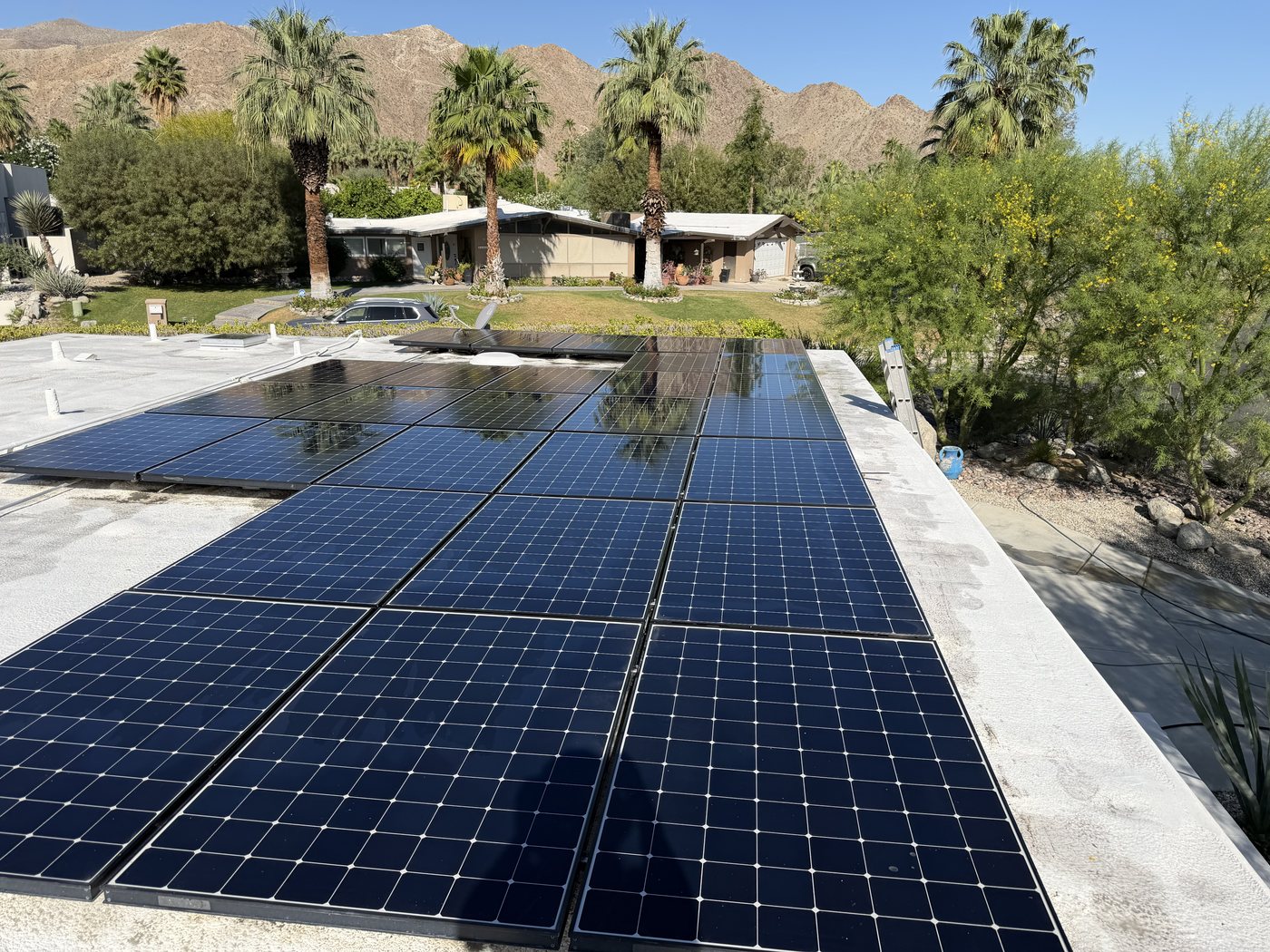
Yes, we clean solar panels, and in the Coachella Valley it is one of the more overlooked maintenance jobs a homeowner can schedule. Research from the National Renewable Energy Laboratory (NREL) found that soiling can cut annual solar output by as much as 7 percent nationally, with high-soiling regions like the desert Southwest seeing losses that run well beyond that.1 In a region that sees as little rain as this one, panels rarely get the natural rinse that keeps systems clean in other climates.
Why desert solar panels get dirty so fast
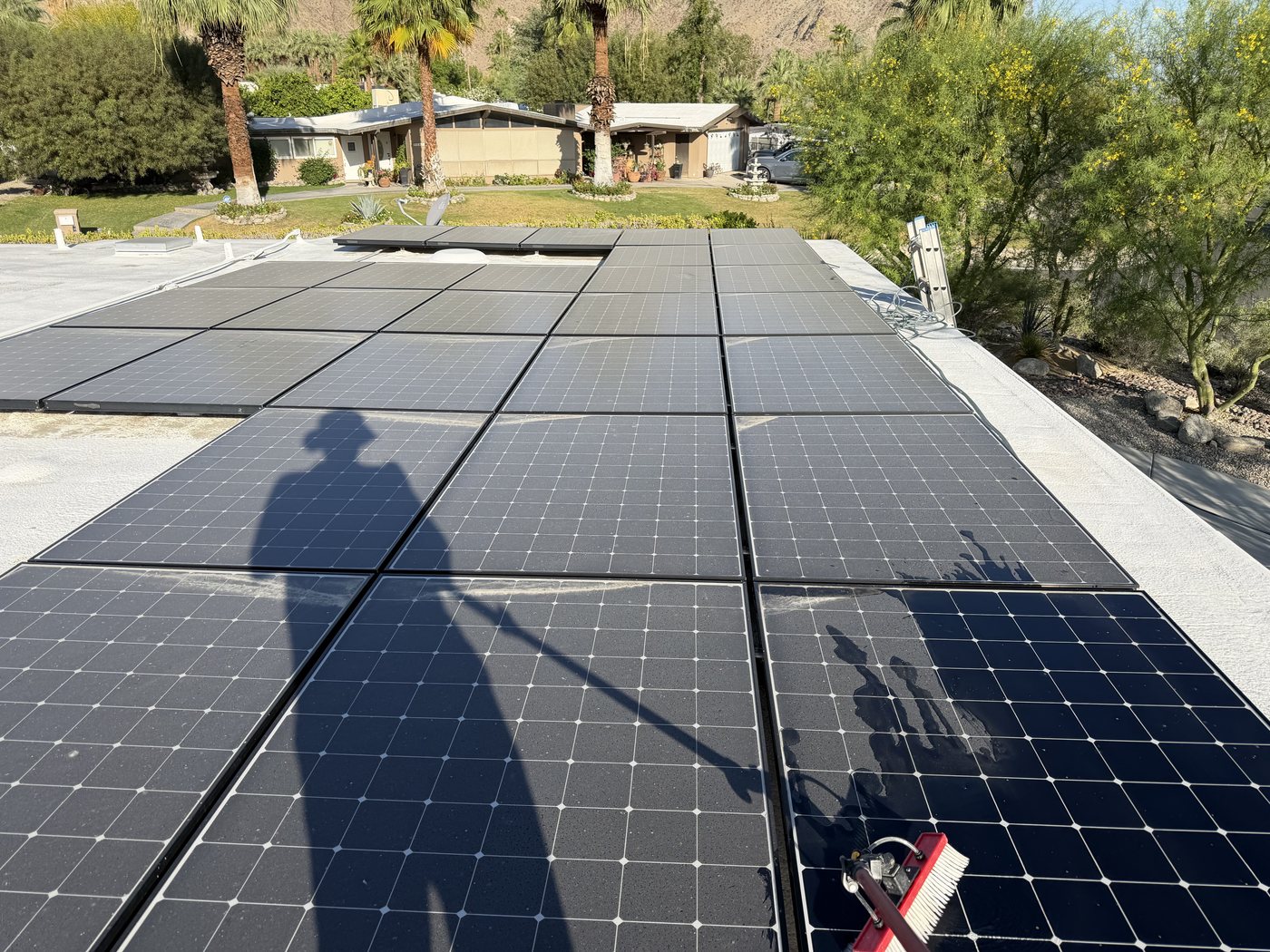
Solar arrays sit flat or angled toward the sun, which means they collect airborne dust the same way a windshield does, except panels almost never get wiped down the way glass in front of you does. Wind events routinely carry fine sand and dust across the valley floor, from Desert Hot Springs down through Coachella, and that grit settles directly onto panel surfaces. Because most residential systems sit on rooftops that owners rarely inspect up close, the buildup often goes unnoticed until a utility bill or a monitoring app shows a drop in output.
Hard water compounds the problem. Sprinkler overspray, pool splash, and even condensation followed by intense sun exposure leave mineral deposits behind as water evaporates. Those spots do not wash away with a light rain, because there is rarely enough rain to do the work. Instead, the residue bakes onto the glass under the same sun the panels are trying to capture, and every layer of dust or mineral film sits directly between the sun and the cells that are supposed to be converting it into electricity.
How much it actually costs you
A layer of dust that looks like a light haze can reduce a panel's output more than most homeowners expect. On a system sized for a typical Palm Desert or Rancho Mirage home, even a 10 percent efficiency loss adds up to real money over a billing cycle, especially during peak summer months when air conditioning is running constantly and every percentage point of solar output matters. Homes near unpaved roads, open desert lots, or recent construction in areas like Indio or Desert Hot Springs tend to see faster buildup and steeper losses.
Signs your panels need attention
A few signals tend to show up before most people think to check the roof:
- A noticeable dip in your solar monitoring app's output compared to the same period last year.
- Visible dust or a dull, hazy film on the panel surface when viewed from a ladder or a drone photo.
- Streaking or spotting concentrated near the lower edge of each panel, usually from irrigation overspray.
- A recent windstorm, monsoon dust event, or nearby construction, any of which can deposit a heavy layer in a single day.
How often panels should be cleaned here
Most Coachella Valley systems benefit from a cleaning every 6 months, with many homeowners choosing a spring visit and a fall visit to bookend the hottest, driest stretch of the year. Homes near golf courses, open desert, or frequent construction often do better on a quarterly schedule, since the dust accumulates faster than a twice-a-year visit can keep up with. If your system sits low or is easy to see from the yard, a quick visual check after any major windstorm or monsoon dust event is worth the two minutes it takes, even between scheduled cleanings.
Why this isn't a DIY-friendly job
Cleaning solar panels yourself carries more risk than cleaning ground-floor windows. Panels are usually mounted on angled rooftops, the glass surface can be more slippery than regular window glass once wet, and the wrong cleaning tool or technique can scratch the anti-reflective coating that keeps panels efficient in the first place. A pressure washer, for example, can crack seals or push water into electrical housings, which risks the sort of damage that costs far more than a professional cleaning ever would.
Professional solar cleaning uses soft brushes, purified or deionized water, and squeegee techniques designed specifically to avoid streaking or scratching, all while working safely at height with the right harness and roof-access equipment. It is the same care that goes into our window cleaning services, just adapted for the angle, material, and safety requirements of a rooftop solar array. See the full rundown of our process on the solar panel cleaning page.
Pairing panels with the rest of your home
Many homeowners in La Quinta, Indian Wells, and Palm Desert schedule solar panel cleaning alongside a regular window cleaning visit. Since a technician is already on site with the right ladders, water setup, and safety gear, bundling the two jobs is often more efficient than scheduling them separately, and it means your whole home, glass and panels included, stays on the same predictable maintenance rhythm through the dustiest parts of the year.
If you are not sure how much output you are losing to buildup, or when your system was last cleaned, it is worth getting a look from a professional who knows what to check for. Visit our solar panel cleaning page to see current rates on our pricing page, or reach out through our contact page to get a visit scheduled around your system and your home's exposure.
Sources:
1. National Renewable Energy Laboratory (NREL), Scientists Studying Solar Try Solving a Dusty Problem