How to Clean Tinted and Low-E Windows Safely
Published · Five Star Window Cleaning

Walk through almost any home in Palm Desert, Rancho Mirage, or La Quinta and you'll find at least a few windows that aren't plain glass. Builders here have been putting low-E glass in new construction for years, and plenty of homeowners add tint film to west-facing rooms to cut the afternoon heat and keep furniture from fading. It makes sense in a place where the sun is out more than 300 days a year.
The catch is that coated and filmed glass doesn't tolerate the same treatment as an old single pane. A cleaner or tool that works fine on regular glass can scratch, haze, or peel a film you paid good money for. With fall cleanings in full swing as seasonal residents come back, here's how to tell what kind of glass you have and how to clean it without damaging it.
Tint film and low-E glass are not the same thing
- Window film (tint) is a thin polyester layer applied to the glass after it's installed, almost always on the interior side. It's softer than glass, so it scratches more easily, and its edges can lift if they get soaked or picked at.
- Low-E glass has a microscopically thin metallic coating applied at the factory to reflect heat. On most modern dual-pane windows that coating sits on one of the inside surfaces of the sealed unit, where you never touch it. Some products put it on the room-facing surface, though, and that exposed coating needs the same gentle approach as film.
If you aren't sure what you have, look for a faint tint or reflection when you hold a light near the glass, a small etched label in a corner of the pane, or a visible film edge about an eighth of an inch in from the frame. Paperwork from your builder or tint installer will usually say too.
What not to use on coated or tinted glass
- Ammonia-based cleaners. Many common blue glass sprays contain ammonia, and film manufacturers generally warn against it. Over time it can break down the adhesive and cloud the film.
- Razor blades and scrapers. Scraping is a normal step on bare glass to lift paint specks or hard-water deposits. On film or an exposed coating, a blade will cut or scratch it permanently.
- Abrasive pads and powders. Scrubbing sponges, steel wool, and powdered cleansers leave fine scratches that show up as haze the moment the sun hits the window.
- Paper towels and rough rags. Paper fibers can be gritty, and so can any cloth that picked up desert dust from the last job. Both can drag sand across a soft surface.
A safe way to clean them
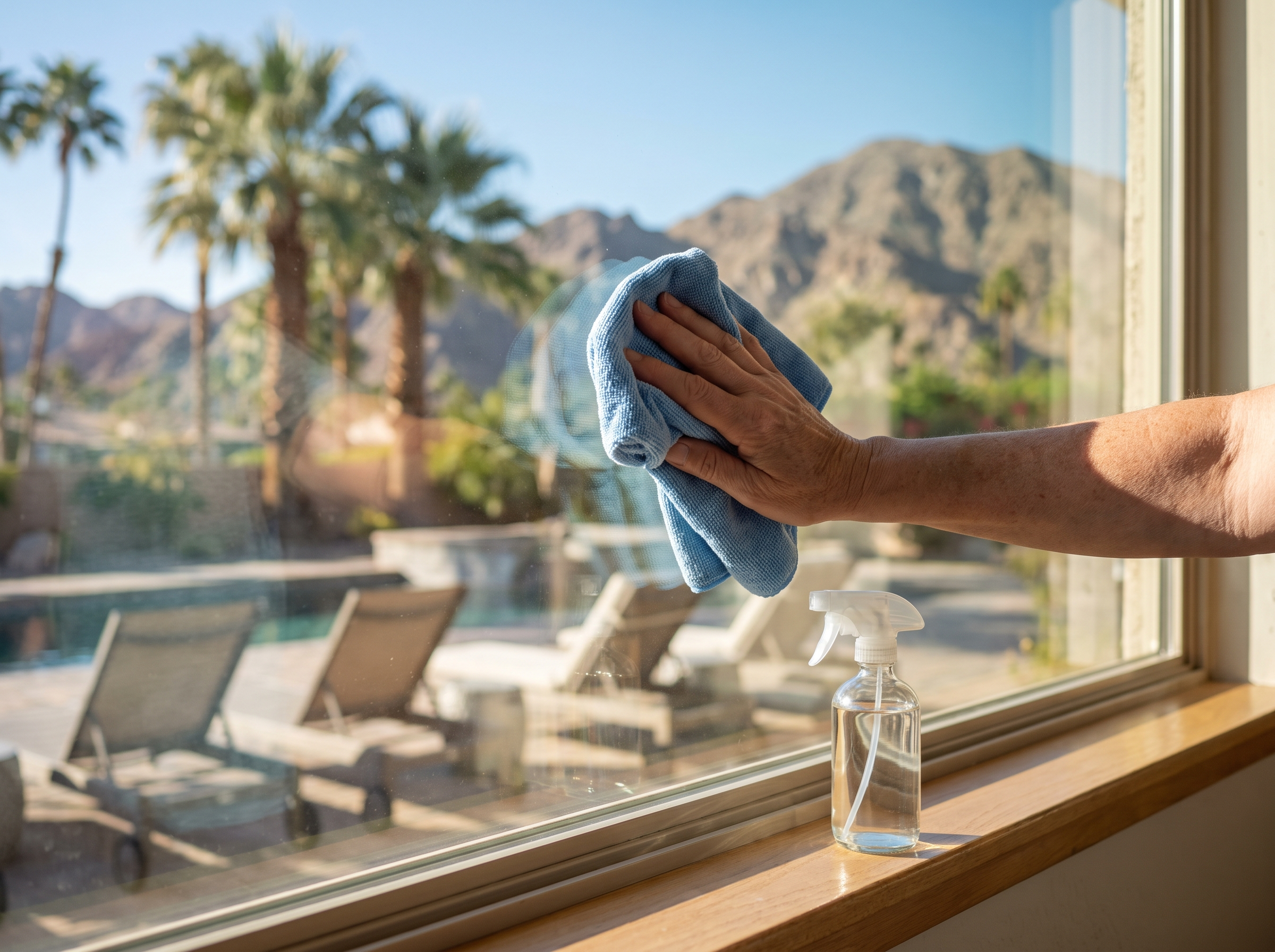
The basic routine is simple and doesn't need special products:
- Rinse or dust first. Desert grit is abrasive. Get the loose dust off with a gentle water rinse on the exterior, or a light pass with a clean, dry microfiber on the interior, before you wipe anything wet across the glass.
- Use a mild solution. A few drops of gentle dish soap in a bucket of water works on almost everything. If you prefer a spray, pick one labeled ammonia-free and safe for tinted glass.
- Use soft tools only. A clean microfiber cloth or a soft scrubber, and a squeegee with a fresh rubber blade that has no nicks in it.
- Don't soak the edges. On filmed windows, wipe toward the center and avoid flooding the bottom edge where water can creep under the film.
- Work in the shade. Same as any glass in the valley, cleaning solution flash-dries on hot panes and leaves streaks. Clean in the early morning, or start on whichever side of the house is in shade.
Just had new tint installed? Most installers ask you to wait several weeks before cleaning the film so the adhesive can fully cure. Follow whatever timeline your installer gives you.
Hard-water spots on coated glass
Mineral spots are harder. On plain glass, stubborn mineral spots can be handled with stronger treatments and careful blade work. Neither is a good idea on film or an exposed coating. A diluted vinegar solution, applied with a soft cloth and wiped off promptly, can lift light spotting on the exterior side of most coated windows. If spots don't budge after a couple of gentle tries, stop there. Heavier scrubbing is far more likely to damage the coating than to remove the minerals. For more on what causes the spotting in the first place, see our guide to hard water stains on windows.
Why professional cleaning helps here
A good crew asks what kind of glass you have before they start and adjusts the process for each window. That usually means skipping the blade on filmed panes, using soft-bristle tools and mild solutions on coated surfaces, and saving the heavier mineral treatments for the bare glass that can handle them. None of that takes much longer, and it keeps an expensive upgrade intact. If you know which of your windows are tinted or coated, mention it when you request a quote so it's on the plan from the start.
The bottom line
Tinted and low-E windows earn their keep in the Coachella Valley by keeping homes cooler and protecting interiors from the sun, but they need a lighter touch than plain glass. Skip the ammonia, the blades, and anything abrasive, rinse the grit off first, and stick with mild soap and microfiber. If your coated or filmed windows are due for a cleaning before season, reach out for a free quote. You can also see our services, pricing page, and Coachella Valley service areas for more.